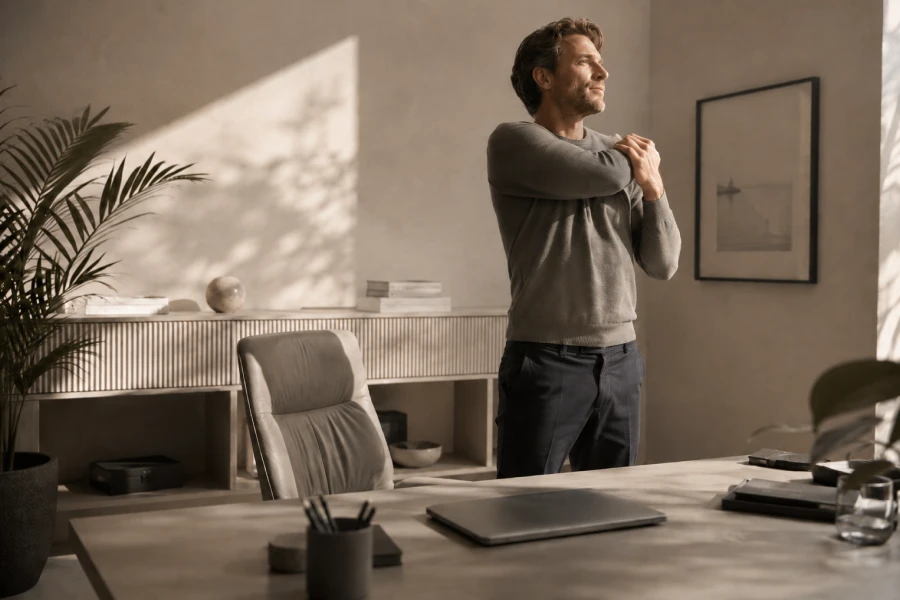
Desk stretches for stiffness can interrupt the slow accumulation of tension during work. Remaining in one position for hours often makes movement feel less available. The problem is not necessarily poor posture or personal discipline. Bodies simply benefit from variety, circulation, and changes in muscular effort. A brief movement break can refresh attention as well as physical comfort. You do not need special clothing, equipment, or a private studio. Most useful exercises fit beside a chair or within a small office. The key is moving regularly before discomfort becomes overwhelming. Sharp pain, numbness, or persistent symptoms deserve professional evaluation. Ordinary stiffness, however, often responds well to gentle variety throughout the day.
Waiting for severe tightness makes movement breaks feel less effective and more urgent. Set a quiet cue before your usual afternoon slump begins. Stand during calls that do not require constant screen attention. Change sitting positions rather than searching for one perfect posture. Roll shoulders and move ankles whenever a task reaches a natural pause. A workday mobility break can take less than three minutes. Frequent short sessions usually fit work better than one elaborate interruption. Keep the intensity low enough that you can return to focus comfortably. Drink water or look across the room while standing. Combining small resets makes the break feel useful instead of disruptive.
Begin by lowering the shoulders away from the ears without forcing them down. Turn the head gently toward one side while keeping the chest forward. Return to center before moving toward the other side. Tilt one ear toward the shoulder without lifting the shoulder to meet it. Circle the shoulders backward with a slow, comfortable range. Interlace fingers behind the head and press lightly into the hands. Using neck and shoulder desk stretches should never produce sharp or radiating pain. Keep breathing and reduce range if tension increases. Finish by reaching both arms forward and widening the upper back. These movements counter repetition without promising a permanent posture correction.
Sit toward the front of the chair with both feet supported. Place hands behind the head or lightly across the chest. Draw elbows back only as far as the ribs remain controlled. Lift the breastbone gently without collapsing into the lower back. Another option uses hands on the chair sides for support. Inhale as the chest opens and exhale while returning to neutral. A seated upper body stretch works best when the neck stays relaxed. Avoid pulling the shoulders aggressively behind you. Repeat slowly instead of holding one extreme position. The movement should create space, not strain or pinching.
Stand behind the chair and use it for balance when needed. Step one foot back while keeping both feet pointed comfortably forward. Bend the front knee slightly to explore the back calf. Then shorten the stance and shift weight for a gentle hip stretch. Place one ankle across the opposite thigh while seated if comfortable. Keep the supporting foot grounded and hinge forward with a long spine. Practicing office hip mobility can make standing after long meetings feel easier. Switch sides and expect them to feel different. Avoid forcing the crossed-leg position when knees or hips object. Finish with several slow sit-to-stand repetitions for active movement.
Workplace culture can make movement breaks feel awkward even when they are brief. Choose subtle exercises when privacy is limited or meetings remain active. Ankle pumps, seated twists, and shoulder rolls attract little attention. Use restroom trips or water refills as natural movement cues. Suggest walking meetings when the conversation does not require screens or notes. Explain your break simply if someone asks, without making it a major announcement. Remote workers can turn cameras off briefly between agenda items when appropriate. Managers can normalize movement by building pauses into longer sessions. The goal is not to perform flexibility at work. It is to make varied movement an ordinary part of working.
Stretching helps, but it cannot fully offset hours without position changes. Adjust screen height and chair support where practical, not obsessively. Keep frequently used objects within a comfortable reach. Alternate sitting and standing if both options feel good. Break large tasks into focused blocks with brief transitions. Use eye breaks because visual strain can contribute to facial and neck tension. Strength training may also support comfort by increasing capacity over time. Sleep, stress, workload, and previous injuries influence how the body responds. Treat movement breaks as one layer of a wider routine. Better comfort usually comes from several modest changes working together.
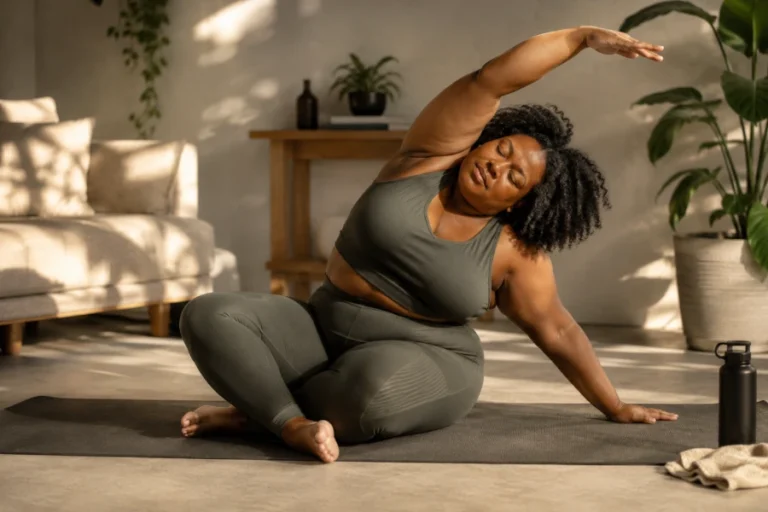
Stand and take three slow breaths while letting the arms hang. Roll shoulders backward five times without rushing the circles. Turn the head gently left and right within a comfortable range. Reach one arm overhead and lean slightly to the opposite side. Place hands on the desk and step back into a supported hinge. Bend and straighten the knees several times to wake the legs. Rise and perform two slow sit-to-stand repetitions. Shake the hands and circle both wrists. Look at something far away before returning to the screen. Resume work with a different sitting position than before the break.



Leave a comment